.jpg)

September 2022 edition of The Organ Manual Magazine!
Welcome to the September edition of The Organ Manual. In this edition we hear from the music team at St Ed’s
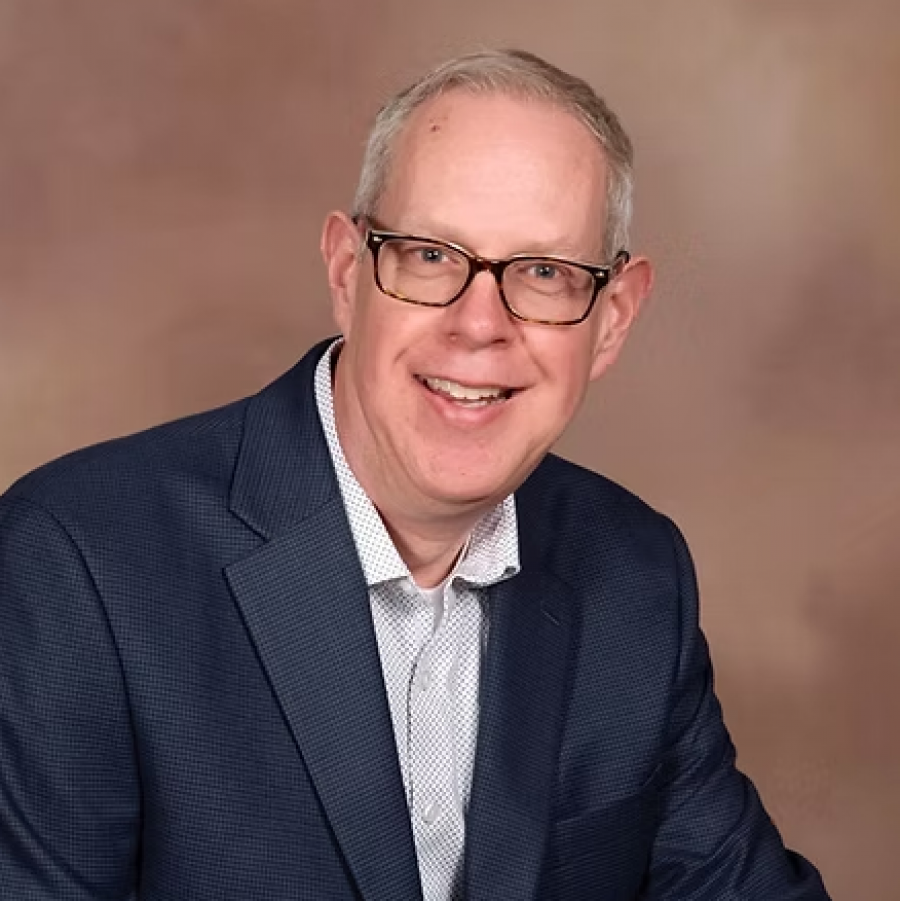
and Adrian Marple about his new role as Director of Music at Inverness Cathedral.
and Adrian Marple about his new role as Director of Music at Inverness Cathedral.
Welcome to the September 2022 edition of The Organ Manual Magazine!
In this edition we hear from the music team at St Ed's and Adrian Marple about his new role as Director of Music at Inverness Cathedral. Ann Elise Smoot highlights the benefits of attending music/organ courses - I know from experience that I have found the various courses I've attended incredibly beneficial - making friends, developing skills, learning new repertoire and much more.
We also have articles from The Girly Organist, Society of Woman Organists, Paul Carr writes about recitals and Paul Hale about life as an organ consultant. Finally, our organ scholar feature is by Rachel Mapp at Leeds Cathedral and two years on from publication, we have a reminder of “The New Oxford Organ Method” tutor book by Anne Marsden Thomas. Our sponsors have recently changed their name, but their support is unwavering - Aspire Organs - thank you, we're indebted to you for your support. I do hope you enjoy this edition. If you have any thoughts, comments, or would like to write a piece for a future edition, do please get in touch.
Best wishes
Anna
Meet the Team
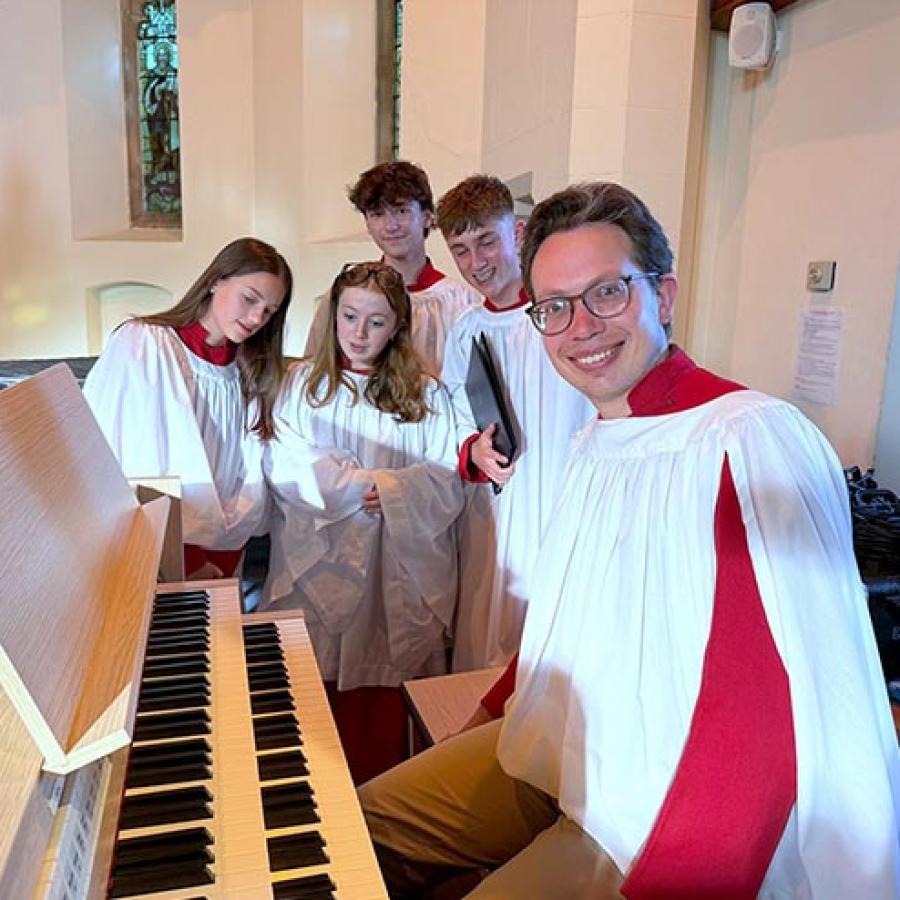
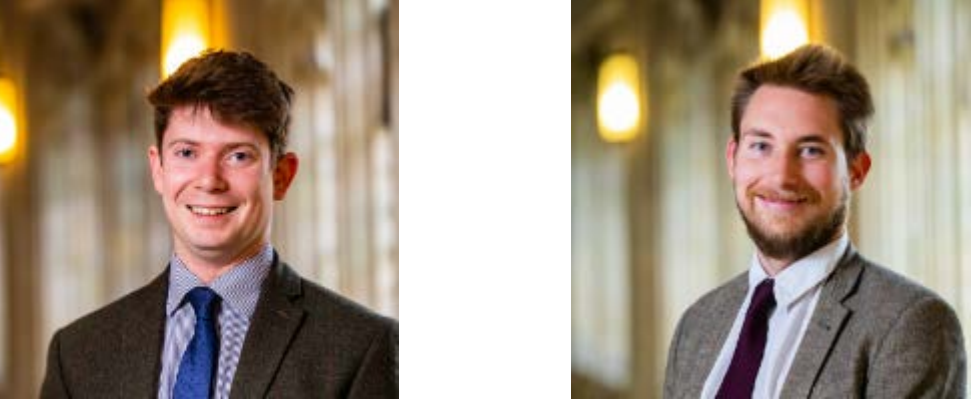
In this edition’s Meet the Team we chat to Timothy Parsons (Director of Music) and Richard Cook (Assistant Director of Music) from St Edmundsbury Cathedral
How old where you when you first started playing the organ and what inspired you to start?
TP: I was probably about five when I first had a go on our local church organ. I used to turn the pages and pull stops for my dad, who is entirely responsible for the obsession with the instrument which my family had to endure as a result.
RC: I was thirteen when I decided to make the jump from playing the piano to the organ. I had just finished as a chorister at Southwark Cathedral, and having listened to all the wonderful organ playing there over the years, I decided that I wanted to give the organ a go. This was made easier by the fact that my father is also an organist, so I had access to an electronic practice organ.
Who inspires you?
TP: I am inspired every day by our choristers, many of whom don’t come from musical or church backgrounds, who approach their duties at the cathedral with such maturity and professionalism. I’ve been incredibly lucky to work closely with four of the UK’s leading choral musicians – Geraint Bowen, Sarah MacDonald, Andrew Lumsden and Timothy Noon – and they continue to inspire me as I have stepped into the shoes of a DoM over the past year or so.
RC: Any of my colleagues in the profession who run and maintain the English choral tradition strike me as inspirational. Their dedication, hard work and perseverance is incredible, and it is a real labour of love. I also find I am inspired by the careers of some of the leading sportspeople – I think that there are many similarities between our professions, in terms of dedication, sacrifice and passion, alongside performance.
Who is your favourite composer?
TP: I find it almost impossible to answer that! Bach, Beethoven, Mozart and Brahms are my favourite pre-20th century composers. I adore the music of Maurice Duruflé, Benjamin Britten and William Walton, all of whom influence my own compositional style pretty heavily. If I could only listen to the music of one composer for the rest of my life, I might go for Beethoven.
RC: Such a tough question – naturally, J.S.Bach. But I also love performing the music of Louis Vierne, particularly his earlier symphonies, 1, 2 and 3. Non-organ/choral composers would have to be Elgar and Vaughan-Williams.
What is your favourite piece of music to play?
TP: I love playing the organ music of Duruflé, and of his few works probably the piece I enjoy performing most of all is the Prélude, Adagio et Choral Varié sur “Veni Creator Spiritus”. It demands a great deal of patient work but it is an utterly beautiful piece to be able to play.
RC: A difficult one – probably Esquisse in B flat minor – Marcel Dupre
Which is your favourite service to play for and why? (For the DoM – Do you miss not playing the organ at many services?)
TP: I’m fortunate enough to accompany our voluntary choir, the St Edmundsbury Singers, pretty regularly - that seems to keep me fit! I do miss playing on a daily basis: there’s nothing quite like accompanying psalms on an organ you know inside out, and I also loved preparing and performing huge accompaniments like Walton’s The Twelve while I was an assistant organist.
RC: Undoubtedly my favourite service to play is Choral Evensong – there is something exceptionally special at the end of most working days, no matter how challenging or busy it has been, to be able to sit in the organ loft and make beautiful music with my colleagues.
What was the most embarrassing moment you have had when playing in public?
TP: I’ve had my fair share of gaffes. I was once planning a gospel improvisation during the gospel reading, and decided to try an idea out silently on the keyboard, forgetting that the stops were already out. On another occasion, when touring in Vienna, I got my manuals mixed up and ‘that’ dominant seventh chord towards the end of Wesley’s Blessed be the God and Father consisted of a solitary pedal B flat.
RC: Not my proudest moment - as the organ scholar at Salisbury Cathedral, I managed somehow to play the wrong processional hymn in a Sunday Eucharist. I only noticed when I found the offertory hymn to be the same as the processional hymn – and the penny then dropped. I had wondered why no-one was really singing…
What is your proudest music moment?
TP: Probably playing for two Radio 3 choral evensong broadcasts on consecutive days while I was at Exeter, including a new set of canticles by Nico Muhly and Finzi’s Lo, the full, final sacrifice. No amount of practice can ever quite prepare you for the sensation when the red light goes on, but I do feel I gave of my best on those intense days.
RC: Doubtless when I worked at Worcester Cathedral, and had overall responsibility for the cathedral voluntary choir, who sang at least one service in the cathedral per week. The moment that springs to mind was listening to them perform Britten’s Ceremony of Carols at an Epiphany service at the cathedral in 2019. To have pulled this off to such a high standard on comparatively little rehearsal time, combined with their other weekly duties, was just wonderful.
What do you think makes the organ at St. Eds Cathedral special?
TP: It’s the combination of the trademark Harrison smoothness and blend with bright, bold choruses which are more reminiscent of the firm’s post-war work at Coventry and St Albans. The organ feels luxurious to play, like driving a very lovely car. And the big Solo reeds are magnificent - a Tuba and an Orchestral Trumpet, perfect foils for each other, not unlike the pair down the road at Ely.
RC: Every time I sit at the console, I feel very privileged to get to play such a fantastic instrument every day! My favourite thing about the organ is that it was conceived in one go, to be a complete cathedral organ. It was designed to serve the Opus Dei of accompanying the liturgy – there are no contrasting divisions designed for playing different schools of music, so it is an holistic instrument,. Tonally, for an instrument of its size, there a great deal of variety, and everything has been voiced almost perfectly for the building. There is a myriad of colours for accompanying (particularly psalms!), and it plays most schools of repertoire well enough, if not necessarily authentically. It’s a very comfortable instrument to play too, and everything feels as though it is in the right place. Playing loudly is quite a visceral experience in the loft, but is certainly exciting. Not to mention that because of the age of the organ, the fabric is in near perfect condition.
Have you always wanted to be a cathedral musician? If not what else did you consider?
TP: I announced my intention of becoming a cathedral organist while I was a chorister at Guildford Cathedral. I did consider some more sensible ideas during my teens, but there was only ever one option for me really.
RC: Remarkably, it was between being a cathedral musician or going to work at sea as an officer on a ship – I have always had a fascination with all things maritime. However, I chose cathedral music, as maintaining a high standard of musicianship whilst working at sea would have been virtually impossible, whereas a career in Cathedral Music would mean I can still travel as a passenger on ships.
What is the biggest highlight of your music career?
TP: I think the academic year just gone (2021-22, my first full year at St Edmundsbury) has, taken as a whole, been the most exciting period of my musical career to date. We’ve been in such an intense period of rebuilding after Covid - there have certainly been ups and downs - but overall the progress made, particularly by the choristers, has been incredible and we’ve ended the year on a real high.
RC: Strangely not a solo performance, but playing the organ part of Elgar’s Dream of Gerontius as part of the 2017 Three Choirs Festival, conducted by Martyn Brabbins in the presence of HRH The Prince of Wales at Worcester Cathedral.
What has been the biggest challenge of your music career?
TP: For me and surely most musicians, the first few months of the Covid pandemic were incredibly difficult. Suddenly finding ourselves without purpose, every one of us was staring into an abyss of uncertainty as to whether there was any future at all for what we do. Thanks to the wonders of science, the NHS, and also a great deal of determination on the part of millions of people that music and culture would bounce back, we’re in a different place now.
RC: I found dealing with the effects of the pandemic extremely challenging – to be barred from my own organ loft whilst the music continued for one of the most important parts of the liturgical year was difficult, to say the least. Happily for me, Tim began working at the cathedral just as things started running again, and it has been plain sailing ever since!
Which organ would you like to play most and of those you have played which is your favourite?
TP: I love the Father Willis organs in Hereford and Truro cathedrals, but my favourite organ of all is the Willis in St Paul’s Cathedral. The sheer beauty of the softer registers, the resplendent reeds and crystalline choruses, all within that extraordinary acoustic, make for a matchless playing experience. Of the organs I haven’t played but would like to, I would probably go for Lincoln or Salisbury, both celebrated cathedral organs which I have yet to try.
RC: So many possibilities here: I guess the organ of Notre Dame de Paris is the organ I’d like to play most – hopefully one day that wish will come true. Of those I’ve played, the standout instruments are the Willis III at Westminster Cathedral, Cavaille-Coll at St Sernin, Toulouse and the Van Hagerbeer/Schnitger at the Laurenskirk in Alkmaar.
When do you do your organ practice?
TP: Usually just before the service I’m playing for, to be honest!! But if I have a recital coming up I like to practice after hours when the building is quiet and I can really listen to the instrument. RC: Currently I tend to use the morning practice slot booked in the cathedral diary for an hour two or three times per week. Do you wear organ shoes? TP: Yes - I wore out my first pair in my early twenties and replaced them with some Organmaster shoes which have been fantastic.
RC: Actually, no – I thought, perhaps slightly unwisely in my teenage years, that it would be more helpful to be able to turn up and play in whatever shoes I am wearing at the time – and that’s a habit that has stuck!
What do you look for in an organ scholar?
TP: Someone with the desire and humility to learn, absorb and work hard. Also someone who will throw themselves into cathedral life and become part of the community.
RC: Not the finished product – obviously potential is key, both musical and as someone to work with as a colleague. Also, enthusiasm for the profession and a willingness to be open-minded and learn are crucial – at the risk of sounding a little condescending, sometimes the correct attitude can get you further than raw ability!
If there was one piece of advice you could give to an aspiring organist, what would it be?
TP: I remember finding everything unpleasantly competitive as I was working towards organ scholarship auditions in my teens. Try not to compare yourself with others, but focus on your own progress, setting yourself high standards and above all remembering to enjoy and be proud of your playing.
RC: Use every available opportunity to avoid putting all your eggs in one basket regarding your musical career – be open minded and listen to the point of view of as many performers, teachers and musicians as possible, and listen to a similarly wide variety of music, styles and genres
When you’re not working, how do you spend your time?
TP: With my wife, Cressida, and Scottish Terrier, Bridget.
RC: To be honest, I have a variety of interests when not working. I am obsessed with football, and enjoy watching as many games as possible, as well as playing at least once per week. Another interest is automotive design and engineering – I am passionate about fast cars and driving, although realise I probably work in the wrong profession enjoy this rather expensive hobby to the maximum.
Download the full September Edition below