.jpg)

Organ Tricks!
The guest blog feature in The Organ Manual this month is written by Patti Whaley.
Reproduced here with kind permission from my friend and supporter of all things Organ, Ms Anna Hallett.
Reproduced here with kind permission from my friend and supporter of all things Organ, Ms Anna Hallett.
|
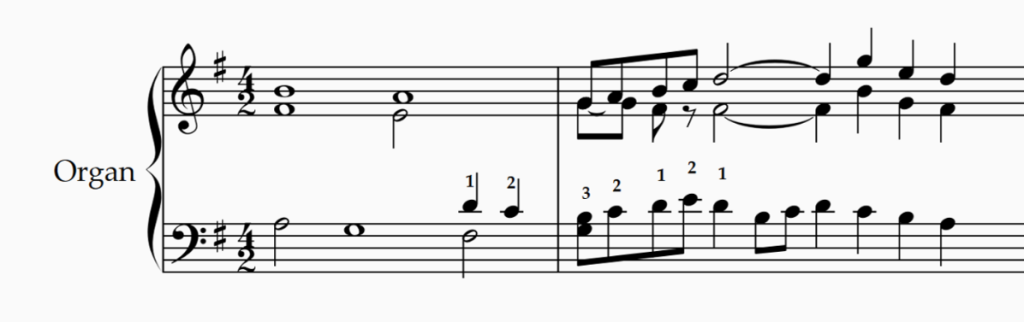
The guest blog feature this month is written by Patti Whaley. Patti studied music history and musicology at Texas Christian University and UNC-Chapel Hill, then detoured into a career in IT and charity management. She took up organ-playing in her 50s and is now organist for two local parish churches near her home in Faversham, Kent. Patti is retired and, when not practicing the organ, can usually be found serving as trustee, treasurer or independent examiner for various charities, or studying Russian. Vaughan Williams’ Rhosymedre is not a difficult piece. Most of us learn it early in our organ life, play it regularly, and don’t really need to practice it anymore…except that one spot. Just at the top of page four, there’s that treacherous place where the left hand suddenly plows into the middle of a string of rising sixths in the right hand. If you’re going to get derailed, it will happen here. Like many composers – Brahms is another culprit – Vaughan Williams is writing as if for a string quartet; the counterpoint of the individual voices is flawless, and how to translate that into ten fingers is not his problem. Some time ago, the Facebook group UK Organists and Choirmasters discussed the best way to play this bar. Looking over their suggestions, trying them out and making some modifications of my own, I came up with this solution:
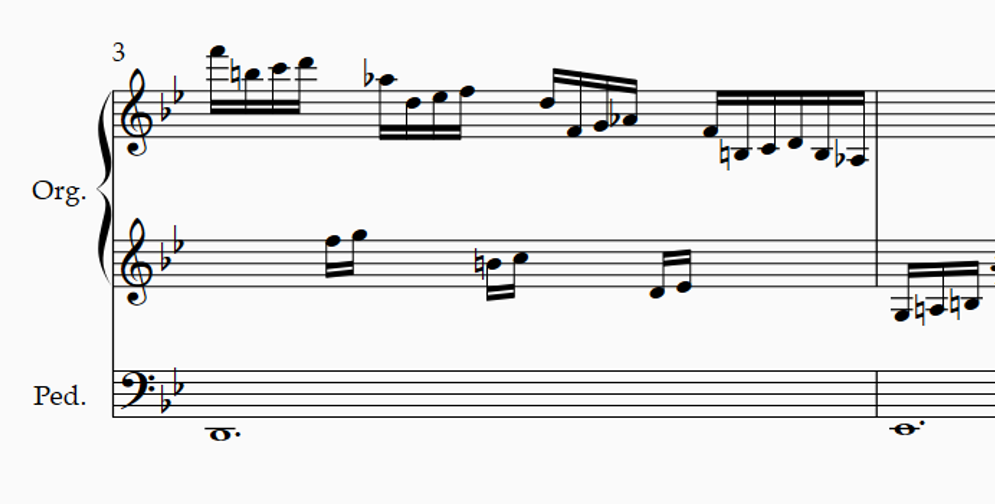
Written that way, it’s quite simple really. So, what if there were a website where we could compile and share solutions to these organ problems? An excellent one already exists for the piano repertoire – Michael Clark’s elegant PianoTricks. When I contacted Michael to see if I could replicate his idea for the organist community, he was enthusiastic and very helpful. I floated some initial ideas on an OrganTricks Facebook page, and had enough interest to make it worth building a OrganTricks web page, which launched in January 2021 with a small collection of solutions to get us up and running. What kind of problems does OrganTricks try to solve? The things that plague me usually fall into a few main categories:
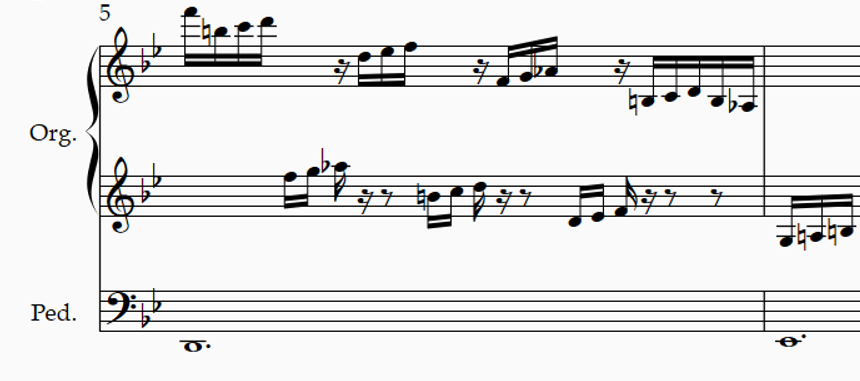
I found it instantly easier if I played it like this:
Judith Weir’s “Tree of Peace” posed a completely different problem: she requires notes that are beyond the compass of my parish organ, and playing the piece required frequent shifting up or down an octave, with corresponding changes of registration, on both the manuals and the pedal. Compiling these initial examples has convinced me that solving these problems is itself a skill. Seeing how other people approach them will show you how to play a specific piece, of course, but it also builds a general toolbox of different techniques that you can try on other pieces. If you don’t like a particular solution, that’s fine — Faxon’s ideas on Widor provoked quite a bit of controversy among our Facebook organists. The point is not to prescribe one solution as the “right” one, but to explore different options and develop a more flexible and creative approach to solving performance problems. As you explore different ways of tackling wide stretches, for example, you will be more able to develop your own solutions for playing pieces that might otherwise be inaccessible. What happens next? If you have your own clever tricks, please send them to me! I will of course give you credit, and it will help other aspiring organists. If you join the OrganTricks Facebook page, you’ll receive notifications of any new tricks that are posted. If you’re also a pianist, you may want to join the PianoTricks Facebook page as well. If you are struggling with a passage, email me; I may not have a solution myself, but I can share the problem with other organists and see who has suggestions. I came to organ playing late in life myself, and am no great technical authority, but I love compiling and sharing ideas, exploring different solutions, and finding ways to make challenging pieces less threatening for budding performers. I wish you success with your organ playing, and I hope OrganTricks can help. |